Products

Desktops to data center, all Make in India

14 product categories across compute, AI, and data center. Deployment-ready from our 28,000 sq ft facility.

Download Product Catalog
AI Solutions

Sovereign AI infrastructure

End-to-end AI compute under one sovereign umbrella. Designed here. Manufactured here. Supported here.

Talk to a Solutions Architect
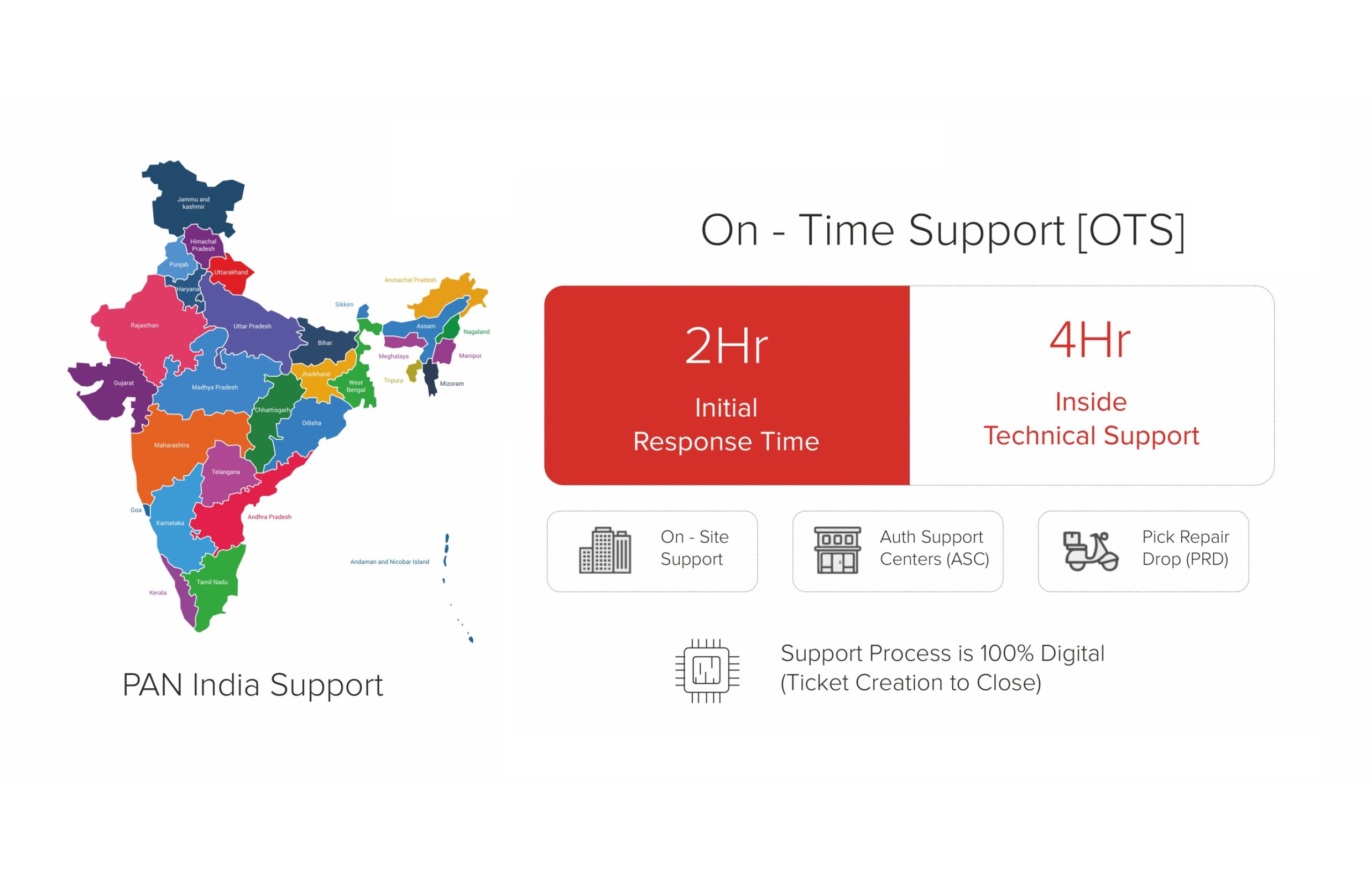
Support

SLA-driven. Not ticket-driven.

Warranty. SLA. On-site service. Account management. Every commitment documented, every response time defined.

Download SLA Commitment
Company

Built on process, not promises

ISO 9001. PLI 2.0. SOP-led manufacturing. The systems behind every device we ship.

Our Story
RDP Technologies Limited company logo

Home  /  RDP AI Labs

RDP AI Labs · v1.0

RDP AI Labs

Build AI capability—not just AI infrastructure.

We design, deploy, validate and operate secure AI environments for training, inference, RAG, fine-tuning, agents and sovereign workloads—on infrastructure we manufacture, integrate and support in India.

Engineering-led. Vendor-pragmatic. Quoted in INR with an itemised bill of materials.

300,000+Devices designed, built and shipped from India
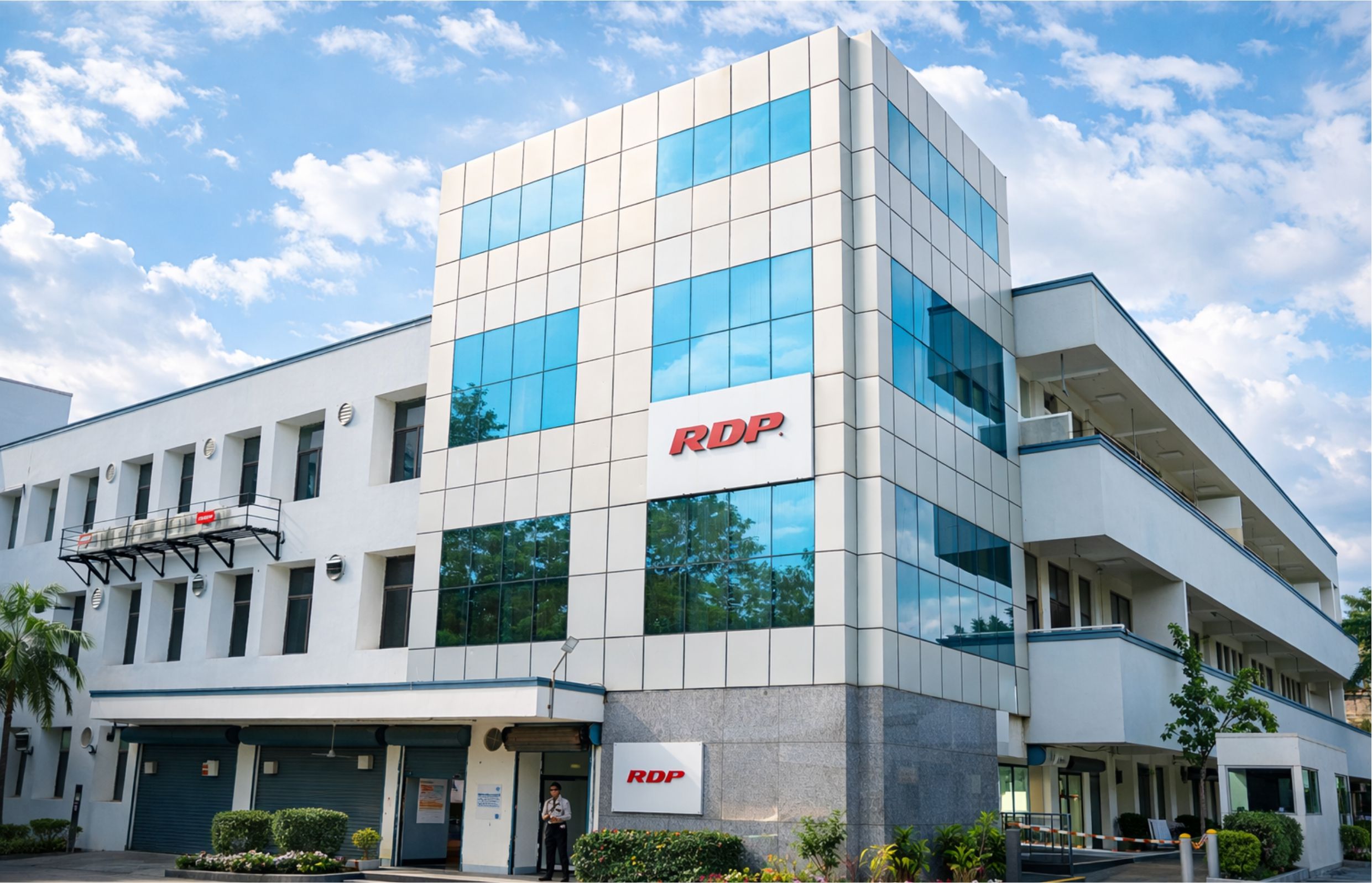
28,000 sq ftManufacturing and integration facility, Hyderabad
14 yrsBuilding computing hardware in India
1M+End users running on RDP systems
OEMWe manufacture the hardware, not just resell it
SovereignPrivate and on-premises deployment, data resident in India
BenchmarkedMeasured on your workload before you scale
In IndiaDesign, integration and support engineering, local
StagedPilot first, capital committed against evidence
ISO 9001PLI 2.0MeitYBISMake in IndiaAvailable on GeM

The problem worth solving

Compute is no longer the constraint. Converting it into working systems is.

Boards approve GPU budgets faster than engineering organisations can absorb them. The gap between "we bought the cluster" and "the cluster serves a workload that a business unit depends on" is where most AI capital quietly stalls. RDP AI Labs exists to close that gap.

01 · CAPITAL

The hardware decision is made too early

Configurations get frozen before anyone has profiled the actual workload—context length, batch shape, concurrency, checkpoint cadence, data gravity. The result is a cluster that is memory-bound where it should be compute-bound, or a fabric that throttles the moment training goes multi-node.

02 · UTILISATION

Installed capacity is not delivered capacity

A rack that draws power is not a rack that earns. Between silicon and served tokens sit drivers, container images, collective communication tuning, schedulers, storage throughput, thermal headroom and failure handling. Each one silently taxes utilisation, and together they decide your real cost per million tokens.

03 · ACCOUNTABILITY

Too many parties, one problem

The OEM blames the integrator, the integrator blames the fabric vendor, the software partner blames the drivers, and the CIO owns the outcome regardless. Splitting an AI programme across five suppliers moves risk to the only party who cannot escalate it.

We treat an AI lab as one engineered system—facility, silicon, fabric, storage, runtime and workload—with a single party accountable from bill of materials to service level.

Definition

What an AI lab actually is

An AI lab is a controlled environment where an organisation develops, benchmarks, fine-tunes, serves and governs AI systems—with reproducible results and known cost. It is six layers, and a weakness in any one of them shows up as a bad number in all of the others. We design, build and operate all six.

Layer 6Applications & governance
Copilots and assistantsAgentic workflowsAccess control and audit trailsEvaluation harnessHuman-in-the-loop reviewUsage and cost attribution
Layer 5Data & retrieval
Ingestion and chunkingEmbeddingsVector and hybrid indexesDocument ACLsRetrieval evaluationData residency boundary
Layer 4Model & serving runtime
Training and fine-tuning stacksLoRA / QLoRAQuantisationInference servers and batchingKV-cache strategyModel registry and versioning
Layer 3Orchestration & platform
Kubernetes or SlurmGPU scheduling and quotasMulti-tenancyContainer and driver baselinesObservability and telemetryBackup and recovery
Layer 2Fabric & storage
InfiniBand or RoCE east-west fabricRail-optimised topologyNVMe scratch tierParallel file systemObject tier for datasetsCheckpoint bandwidth
Layer 1Compute & facility
GPU workstations, servers and racksPower envelope and PDU designAir, rear-door or direct-liquid coolingRack density and weightStructured cablingPhysical security
Why this framing matters to a buyer. Most "AI infrastructure" proposals price Layer 1 and assume Layers 2–6 are somebody else's problem. That assumption is where budgets go to die. Our scope statement names the owner of every layer before anything is ordered.

Service catalogue

Nine engagements. Each one ends in an artefact you can review.

Every service below produces something a technical evaluator can inspect—an architecture, a bill of materials, a benchmark report, a runbook—not a slide deck. Engagements can be taken individually or sequenced into a programme.

AI Lab Design & Capacity Planning

We profile the workload first, then size the machine. Context length, batch shape, concurrency, checkpoint cadence and data gravity drive the configuration—not the other way round.

  • Requirements workshop and workload profile
  • Reference architecture and topology
  • Itemised bill of materials
  • Power, cooling and rack plan
  • Capacity model and TCO assumptions

Deliverable: architecture pack + BOM

GPU Workstations & Servers

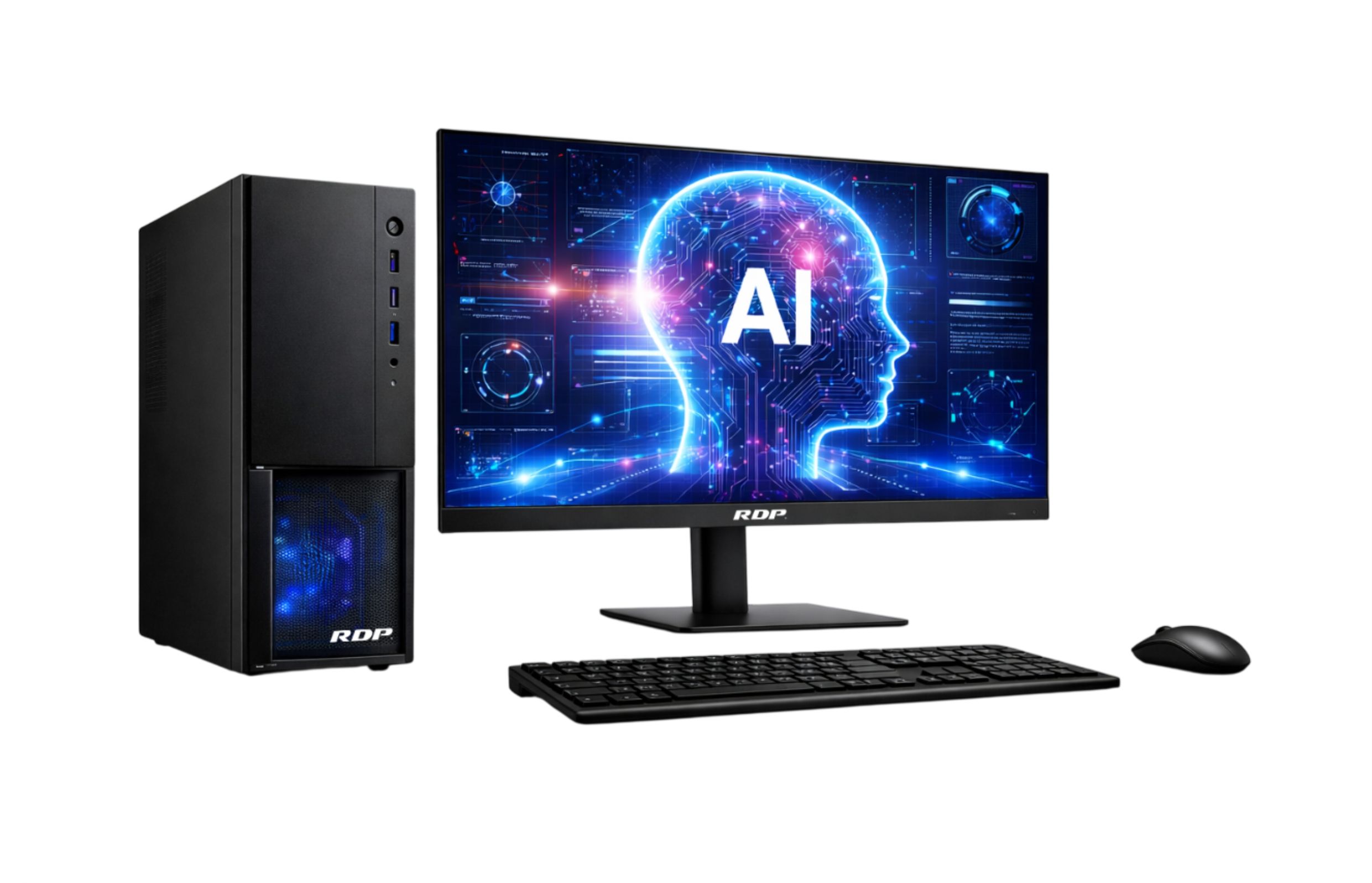
Validated single systems for local development, fine-tuning and inference—built and burned in at our own facility, so the machine that arrives is the machine that was specified.

  • Component selection and thermal validation
  • Assembly and 72-hour burn-in
  • Driver, CUDA and container baseline
  • Pre-loaded toolchain and images
  • Onsite warranty and spares

Deliverable: deployed, benchmarked system

AI Cluster Buildout

Multi-GPU and multi-node environments where the fabric is designed for the collective pattern the workload actually uses—because that is what decides scaling efficiency, not the GPU count.

  • Rail-optimised InfiniBand or RoCE design
  • Storage tiering and checkpoint bandwidth
  • Scheduler, quotas and multi-tenancy
  • Golden images and driver baseline
  • Acceptance benchmark report

Deliverable: accepted, benchmarked cluster

Private AI & RAG

Put your own documents and systems behind a model without the data leaving your boundary. Retrieval quality is treated as an engineering problem with an evaluation set, not a demo.

  • Ingestion, chunking and embedding strategy
  • Vector and hybrid index design
  • Document-level access control
  • Retrieval evaluation and grounding checks
  • Secure inference endpoint

Deliverable: private RAG service + eval set

Fine-tuning & Model Customisation

For the cases where retrieval and prompting genuinely are not enough. We start by proving that they are not—then adapt the smallest model that clears your evaluation bar.

  • Dataset review, curation and licensing check
  • LoRA / QLoRA or full fine-tune plan
  • Training run with tracked experiments
  • Evaluation against a held-out set
  • Model registry and rollback path

Deliverable: adapted model + eval report

Inference Deployment

Turning a model into a service with a latency profile and a unit cost you can put in a budget. Serving strategy, batching and quantisation are chosen against your traffic shape.

  • Serving runtime and batching strategy
  • Quantisation and KV-cache tuning
  • API gateway, auth and rate limits
  • Autoscaling and failure behaviour
  • Latency, throughput and cost telemetry

Deliverable: production inference service

AI Agents & Automation Lab

Agents that touch real business systems need permissions, guardrails and an audit trail before they need autonomy. We build the pilot with the controls already in place.

  • Use-case selection and value model
  • Tool and system integration
  • Permission model and guardrails
  • Observability and audit logging
  • Pilot, review and handoff

Deliverable: governed agent pilot

Benchmarking & Validation

Measure the real workload before committing to scale. We publish the method with the result, so your team can reproduce the number and challenge it.

  • Workload definition and test harness
  • Throughput, latency and utilisation runs
  • Scaling efficiency across nodes
  • Power draw and thermal behaviour
  • Cost per unit of useful output

Deliverable: reproducible benchmark report

Managed Support & Operations

Labs decay quietly. Drivers drift, storage fills, utilisation slips and nobody notices until a training run fails at 3 a.m. We keep the environment usable.

  • Runbooks and escalation paths
  • Patching and driver lifecycle
  • Monitoring, alerting and incident support
  • Quarterly capacity and utilisation review
  • Onsite hardware support and spares

Deliverable: operated environment + SLA

Reference architectures

Three starting points, sized against your workload

These are reference architectures, not fixed SKUs or quoted prices. They exist so a technical team can locate itself quickly and so a finance team knows roughly which order of magnitude the conversation is in. Final configuration is confirmed after discovery and benchmarking.

Lab Zero

Prove the use case before it becomes a capital request.

  • Best forDevelopers, small teams, first RAG or evaluation work, early pilots
  • Compute1–4 GPUs — professional workstation or a compact single server
  • FabricSingle node; standard 10/25GbE north-south
  • StorageLocal NVMe scratch, sized to the dataset
  • FacilityAir cooled, standard power; office or comms room
  • PlatformContainerised toolchain, notebooks, local inference and vector store
  • OutcomeBaseline benchmark, a working prototype, and a defensible sizing basis
Most requested

Private Enterprise AI Lab

Internal AI that production teams can actually depend on.

  • Best forEnterprises running private copilots, org-scale RAG, fine-tuning and production inference
  • Compute8-GPU SXM node, or a 2–8 node pod; PCIe inference nodes where the workload is serving-heavy
  • Fabric200/400G east-west — InfiniBand or RoCE, rail-aware topology
  • StorageNVMe scratch + parallel file system + object tier for datasets
  • FacilityHigher-density racks; air or rear-door heat exchanger, with a power and thermal plan
  • PlatformKubernetes or Slurm, quotas, identity, model registry, observability, backup
  • OutcomeA multi-tenant platform with SLAs, cost attribution and a documented recovery path

AI Factory / Datacenter Lab

Rack-scale capacity engineered to be sold, shared or scaled.

  • Best forNeoclouds, datacenter operators, national and university programmes, frontier-scale training
  • ComputeMulti-node and rack-scale systems, including liquid-cooled NVL-class racks
  • FabricNon-blocking, rail-optimised compute fabric with a separate storage fabric
  • StorageParallel file system sized to checkpoint bandwidth, not just to capacity
  • FacilityHigh-density power design, direct-liquid cooling and CDU, structural and thermal review
  • PlatformMulti-tenant scheduling, isolation, telemetry, utilisation and billing data
  • OutcomeCapacity that can be operated as a service, with acceptance testing behind it
How to read these. Every lab is sized against workload, data volume, concurrency, power envelope, budget and growth plan. We will tell you when a smaller configuration is the right answer, and we will tell you when your facility—not your budget—is the binding constraint. Standard configurations can be bought online at RDP GPU Mart; anything beyond that is quoted after discovery.

Engagement model

Six stages. Each one has an exit artefact and a decision point.

You can stop after any stage. That is deliberate—it keeps the commercial risk staged and it forces us to earn the next phase with evidence rather than optimism.

1

Discover

Understand the workload, the data, the constraints and who has to sign off.

  • Workload profile
  • Data and residency map
  • Facility and power reality check
  • Success criteria
2

Architect

Design the system across all six layers and price it honestly.

  • Reference architecture
  • Itemised BOM
  • Power and cooling plan
  • TCO assumptions
3

Build

Manufacture, integrate, rack and cable—then burn it in before it ships.

  • Assembly and burn-in
  • Rack and fabric build
  • Golden images
  • Factory acceptance
4

Validate

Benchmark against your workload and publish the method with the numbers.

  • Acceptance benchmark
  • Scaling efficiency runs
  • Thermal and power check
  • Cost-per-output baseline
5

Deploy

Move it into service with access control, monitoring and a rollback path.

  • Platform and scheduler
  • Identity and quotas
  • Observability
  • Knowledge transfer
6

Operate

Keep it healthy, keep it utilised, and review capacity on a schedule.

  • Runbooks and SLA
  • Patching and lifecycle
  • Incident support
  • Capacity reviews

Validation standard

We commit to a measurement method before we commit to a number.

Anyone can quote a datasheet. What decides whether an AI programme works is what the system does on your data, at your concurrency, in your building. These are the metrics we instrument and report during validation—with the harness handed over so your engineers can reproduce and challenge every figure.

MetricWhat it actually tells youWhy it decides the outcome
Model FLOPs utilisationHow much of the silicon you paid for is doing useful mathematics, as a fraction of peak.The single most honest efficiency number in training. A low figure means you bought capacity you are not using.
Tokens / sec / GPUServing throughput normalised to hardware, at a stated batch size and context length.Normalises vendor claims. It is the only fair way to compare two very different configurations.
Time to first tokenHow long a user waits before anything appears, at target concurrency.Decides whether an internal copilot gets adopted or quietly abandoned.
p99 latencyThe tail experience under load, not the average.Averages hide the failures. Users and SLAs live in the tail.
Scaling efficiencyThroughput retained going from one node to N nodes.Exposes fabric and topology mistakes that no single-node test will ever reveal.
Collective bandwidthMeasured all-reduce and all-gather bandwidth across the fabric.The ceiling on distributed training. Usually the real bottleneck, rarely the one that gets tested.
Checkpoint timeHow long a write and a restore take at your model size.Determines how much work a failure costs you, and how often you can afford to save.
Job failure rateInterruptions and restarts per thousand GPU-hours.Reliability engineering, not marketing. It sets the effective capacity of the cluster.
Power per rackMeasured draw under sustained load, with the thermal margin left.Tells you whether the next rack fits in the building or needs a facility project first.
Cost per 1M tokensFully-loaded rupee cost of useful output, including power and amortisation.The number a CFO can compare against an API bill. It is the whole business case in one figure.
Retrieval qualityRecall at k and groundedness against a held-out evaluation set, for RAG systems.Separates a system that answers correctly from one that answers confidently.
What we will not do. We do not present another customer's benchmark as a forecast of yours, and we do not publish performance figures, certifications or compliance claims we cannot evidence. Targets are set against measured results on your workload, and where a number is a design assumption rather than a measurement, we label it as one.

Reference workloads

What these labs are built to run

Each workload has a different bottleneck. Naming it early is what keeps the architecture honest.

Pre-training & continued pre-training

Bound by collective bandwidth and checkpoint throughput long before it is bound by GPU count.

Fine-tuning & alignment

Bound by GPU memory and dataset quality. Usually solved with a smaller model than expected.

Production inference

Bound by KV-cache memory and batching strategy. Latency and cost move in opposite directions.

Retrieval-augmented generation

Bound by retrieval quality and index freshness far more often than by model size.

Agentic workflows

Bound by tool latency, permissions and error handling. Throughput is rarely the problem.

Computer vision & video

Bound by data pipeline and decode throughput; the GPU is often waiting on storage.

Scientific & HPC simulation

Bound by interconnect latency and double-precision capability, not by tensor cores.

Synthetic data & evaluation

Embarrassingly parallel and cheap to scale — the ideal first workload on new capacity.

Who we build for

The same engineering, framed for the decision you are actually making

CIO & CISO

Useful AI without exporting your data

Private and on-premises deployment with data resident in India, documented data flows, document-level access control and an audit trail your security review can actually read. A staged pilot means the compliance conversation happens on a real system, not a proposal.

CTO & Head of Engineering

An architecture your team can own

Reference architecture, golden images, the benchmark harness and the runbooks are handed over. No proprietary black box, no dependency you cannot replace. We are vendor-pragmatic and we will tell you where your existing estate constrains the workload instead of proposing a rebuild by default.

Neoclouds & DC operators

From installed capacity to billable service

The layer between racks and revenue: fabric design, multi-tenant scheduling and isolation, image and driver standardisation, burn-in and acceptance testing, utilisation telemetry, and a hardware supply chain manufactured and supported in India rather than air-freighted and hoped for.

AI labs & research teams

Repeatable environments, reproducible results

Cluster environments where an experiment run in March reproduces in September—versioned images, tracked runs, a model registry, scheduler quotas that survive contention, and checkpointing designed around your failure budget.

Government & public sector

Locally governed, auditable capability

Sovereign deployment on Make in India hardware, procurable through GeM, with an itemised bill of materials and an acceptance test that is written down before the order is placed. We describe what the system does; we do not claim approvals we do not hold.

Investors & boards

Capital deployed against measured outcomes

A staged model where each tranche is released against a benchmark, not a milestone slide. Cost per million tokens and utilisation are reported from day one, so the question "is this asset earning?" has a number attached to it every quarter.

Why RDP AI Labs

Most AI partners own one layer. We own the chain.

RDP Technologies Limited has spent fourteen years designing and manufacturing computing hardware in India. AI Labs is the engineering practice built on top of that—which is why the architecture, the machine, the deployment and the support contract can all come from one accountable party.

We manufacture what we deploy

A 28,000 sq ft facility in Hyderabad, 300,000+ devices shipped and 1M+ end users. When a component needs to change, a thermal design needs revisiting or a board needs replacing at 2 a.m., we are not raising a ticket with someone else's factory.

Datacenter engineering, not just server sales

Rack density, power distribution, liquid cooling and structural loading are part of the design conversation from the first session—because in high-density AI builds the building is usually the constraint that nobody costed.

Sovereign by construction

Make in India hardware, deployment inside a boundary you nominate, data resident in India, and procurement through direct purchase or GeM. Sovereignty here is an architecture and a supply chain, not a marketing adjective.

Evidence before scale

Every engagement is staged so that capital is committed against a measured benchmark. If the pilot says a smaller configuration is sufficient, that is what we will quote—we would rather size it right than sell it twice.

Transparent commercials in INR

Itemised bills of materials, rupee pricing, and standard configurations purchasable online through RDP GPU Mart. Procurement and finance can see exactly what they are buying, line by line.

Support that stays after go-live

Onsite hardware support, spares, driver and platform lifecycle management, monitoring and quarterly capacity reviews. The lab is still useful in year three, which is when most of the value was supposed to arrive.

Questions we get asked

The eight questions that decide the engagement

Is RDP AI Labs a consulting practice or a hardware business?
Both, deliberately. AI Labs is an engineering practice sitting on top of RDP's own manufacturing and datacenter infrastructure business. We design the architecture, build and integrate the hardware, validate it against your workload, and stay on for operations. One accountable party from bill of materials to service level—which is precisely the seam where multi-vendor AI programmes usually fail.
Can we start with a pilot instead of a full cluster?
Yes, and we usually recommend it. A staged proof-of-concept on a single node or a small pod establishes real throughput, latency and cost-per-token numbers on your data before capital is committed to scale. The benchmark report from that stage becomes the sizing basis for the production build—and occasionally the evidence that you need less hardware than you thought.
Does our data ever leave our environment?
Not in a private or on-premises deployment. Models, vector indexes and inference all run inside infrastructure you control, in a datacenter you nominate. We design for data residency in India and document the data flows, retention points and access boundaries so your security and compliance teams have something concrete to review rather than an assurance.
What performance numbers will you commit to?
We commit to a measurement method before we commit to a number. During validation we report model FLOPs utilisation, tokens per second per GPU, time-to-first-token, p99 latency, collective bandwidth, scaling efficiency, GPU utilisation, power draw per rack and fully-loaded cost per million tokens—on your workload, with the harness handed over. Targets are then agreed against those measured results rather than against a datasheet.
We are a neocloud or datacenter operator. What do you actually add?
The layer between racks and revenue. Reference architecture and fabric design, multi-tenant orchestration, scheduling and isolation, image and driver standardisation, burn-in and acceptance testing, utilisation and telemetry so you can bill accurately, and a hardware supply chain manufactured and supported in India. We help convert installed capacity into a service that customers renew.
Can you work with GPUs and vendors we have already chosen?
Yes. We are vendor-pragmatic. If you have existing NVIDIA, AMD or Intel estate, existing storage, a preferred hypervisor or a cloud footprint you intend to keep, we design around it—and we will tell you plainly where it will constrain the workload rather than proposing a rebuild by default. A hybrid design is often the correct answer.
How long does a deployment take?
It depends on scale, facility readiness and procurement route, and we scope it explicitly during discovery instead of quoting a comfortable number here. A single-node lab is a short engagement. A multi-rack, liquid-cooled build is governed by power and cooling readiness and by component lead times—both of which we surface in writing, with the risks named, before you commit.
How is RDP AI Labs procured?
Through direct enterprise purchase, through GeM for government and public-sector buyers, or online through RDP GPU Mart for standard configurations. Pricing is quoted in INR with the bill of materials itemised, so procurement and finance can review component-by-component what is being bought and what is being charged for engineering.

Plan your AI lab

Tell us the workload. We will tell you the machine.

A short brief is enough to start. An RDP engineer reviews it and comes back with either a set of clarifying questions or a first-pass architecture—not a generic brochure.

Please do not include confidential data, credentials or personal information about third parties in this field.

We use the details you provide only to respond to this enquiry and do not share them outside RDP. We do not promise a fixed response time we cannot operationally guarantee—an engineer picks these up during Indian business hours.

RDP AI Labs

The gap between AI ambition and working infrastructure is an engineering problem.

It has an owner, a method and a set of numbers. Bring us the workload and we will bring the architecture, the machine, the benchmark and the people who keep it running.

Reliability is Our Product.  ·  Make in India. Built for an AI-Ready India.